
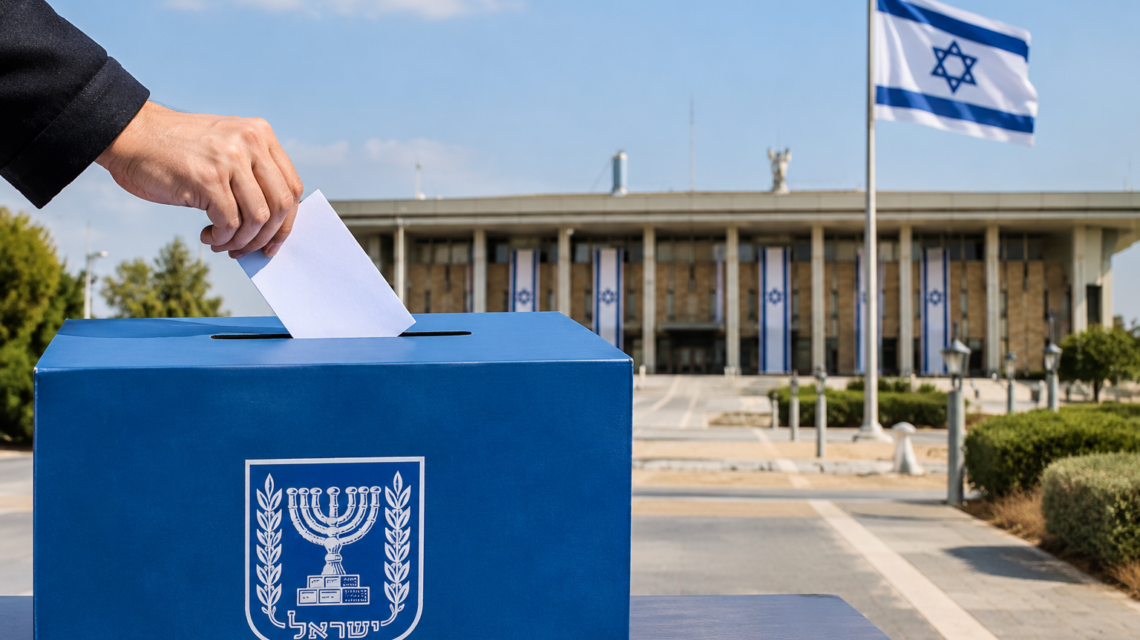
Israel's 2026 general election has left the country's political future uncertain, with early results pointing to a closely contested race between Prime Minister Benjamin Netanyahu's political bloc and an opposition grouping led by Gadi Eisenkot.
Voting took place on Tuesday, October 27, with the election drawing significant public attention amid continuing security concerns, disagreements over government policy, and questions about the country's political direction.
As vote counting continued on Wednesday, October 28, partial results showed Netanyahu's Likud party leading the race. However, neither major political bloc had secured the parliamentary majority needed to form a government independently.
According to The Times of Israel, figures published by the Central Elections Committee showed Netanyahu's bloc with 56 projected seats, compared with 48 for the bloc led by Eisenkot, while Arab parties held a combined 16 seats. These figures reflected a partial count and could change as more ballots were processed. Source: The Times of Israel.
The key question is no longer simply which party will finish first. It is whether either side can build a coalition with enough support to govern.
Latest Israel Election Results 2026
The election results remain provisional, and the final distribution of parliamentary seats has not yet been confirmed.
Here are the main developments reported during the initial count:
- Likud leads the party race: Netanyahu's party has been ahead in the partial results reported so far.
- No confirmed parliamentary majority: Neither main bloc has demonstrated a clear, settled path to the 61 seats required to control the 120-member Knesset.
- Gadi Eisenkot remains a central opposition figure: His Yashar party is challenging Netanyahu's political position.
- Arab parties could influence coalition negotiations: Their representation may become important if neither major bloc can secure enough seats through its existing partners.
- Final results are still pending: Additional ballots and official verification could alter the seat projections.
For the latest figures, readers should consult the Central Elections Committee's official results portal and compare them with reputable news reports.
How Many Seats Are Needed to Form an Israeli Government?
Israel has a parliamentary system in which voters elect representatives to the Knesset, the country's legislature.
The Knesset has 120 seats. A government generally needs the support of at least 61 members to establish a parliamentary majority.
This system means that winning more seats than any other individual party does not automatically guarantee control of the government.
Political parties often negotiate agreements with other parties after an election. These agreements determine which groups will support the government, who will hold ministerial positions, and which policies will receive priority.
In the current election, the gap between the leading political blocs makes these negotiations particularly important.
Even if Netanyahu's Likud finishes as the largest party, he will still need sufficient support from other parties to assemble a governing coalition. Eisenkot faces the same basic challenge.
Until the vote count and subsequent political negotiations become clearer, declaring either side the definitive winner would be premature.
Benjamin Netanyahu's Position After the Election
Benjamin Netanyahu remains one of the most influential figures in Israeli politics, having served as prime minister for much of the past three decades.
This election is an important test of his leadership and the public's assessment of his government's record.
Netanyahu and his allies have emphasised national security, military strength, and their approach to regional threats. These issues have played a significant role in Israeli political debate, particularly following the Hamas-led attack of October 7, 2023, and the wars that followed.
At the same time, Netanyahu has faced criticism over security failures, his government's policies, and his long-running corruption trial, in which he denies wrongdoing.
The election therefore represents more than a competition between political parties. It also reflects disagreements over leadership, accountability, security policy, and the direction of the country.
The early vote count suggests that Netanyahu's political bloc remains competitive. However, its ability to form a government will depend on the final seat distribution and the willingness of potential coalition partners to cooperate.
Who Is Gadi Eisenkot, and Why Does His Party Matter?
Gadi Eisenkot, a former Israeli military chief, has emerged as a leading opposition figure through his Yashar party.
His campaign has sought to present an alternative to Netanyahu's leadership and appeal to voters seeking a different political direction.
The election has placed Eisenkot in a difficult but potentially influential position. His party's performance may give the opposition a stronger parliamentary presence, but that does not necessarily mean it can form a government.
Coalition arithmetic is particularly complicated because several parties have different positions on security, religious policy, military service, and cooperation with Arab political groups.
If Eisenkot's bloc falls short of a majority, it may have to consider arrangements with parties outside its immediate political circle. Such an approach could create opportunities, but it could also produce disagreements among potential partners.
For now, Eisenkot's next steps will depend on the final results and the political options available after the count is complete.
Could Arab Parties Decide the Election Outcome?
Arab political parties could play an important role in determining what happens next.
Partial results reported by Israeli media showed Arab parties collectively holding a significant number of projected seats. If the main political blocs remain short of 61 seats, these representatives could become influential during government-formation negotiations.
However, parliamentary representation does not automatically translate into participation in a governing coalition.
The major political figures have expressed reservations about different forms of cooperation with Arab parties. Their positions could limit the options available to the opposition or complicate efforts to establish a stable government.
Arab citizens' political participation is also an important aspect of the election. Early reporting indicated high turnout among Arab voters, reflecting the significance of representation and public policy for these communities.
The final number of seats won by Arab parties, and the positions they adopt after the election, will be important developments to follow.
Why This Election Matters for Israel's Future
Israel's election is taking place against a backdrop of security concerns, political divisions, and difficult regional relationships.
Several major issues are likely to shape the next government's agenda.
National security and regional conflict
Security remains a central concern for voters. The aftermath of the October 7 attacks, the wars involving Gaza and other regional actors, and continuing concerns about Iran have influenced political debate.
The next government will face decisions about military strategy, diplomatic relations, and the country's long-term security priorities.
Military service and religious policy
Disagreements over exemptions from military service for ultra-Orthodox communities have been a significant source of political tension.
The issue affects the relationship between religious parties, secular voters, military obligations, and the formation of governing coalitions.
Economic pressure and public services
The cost of living, government spending, taxation, and the economic impact of prolonged conflict remain important concerns.
The next administration will need to balance security expenditure with the needs of households, businesses, and public services.
Relations with international partners
Israel's international relationships are also likely to remain a major policy issue. Decisions involving the United States, neighbouring countries, and broader diplomatic efforts could affect the country's security and economic outlook.
The election result will not resolve these questions immediately, but the composition of the next government could influence how they are addressed.
What Happens After the Israel Election?
Once the vote count is sufficiently complete and the results are officially confirmed, attention will turn to government formation.
Israel's political process generally involves several stages.
- Completing the count: Election officials process the remaining ballots and verify the results.
- Confirming the results: Official procedures establish the final distribution of seats in the Knesset.
- Presidential consultations: President Isaac Herzog consults political representatives before deciding which candidate is best positioned to form a government.
- Coalition negotiations: The designated candidate attempts to secure the support needed to establish a majority.
- Forming a government: If negotiations succeed, a government can be presented to the Knesset for the necessary confidence and approval procedures.
These steps can take time, particularly when the election produces a fragmented parliament.
If no candidate can assemble a viable coalition, Israel could face an extended period of political uncertainty. A caretaker government may continue managing state affairs while negotiations proceed, and a further election could eventually become a possibility if the political deadlock cannot be resolved.
The outcome will depend on the final results, negotiations between the parties, and the applicable constitutional procedures.
Israel Election Results 2026: What to Watch Next
The next stage of the election story will depend on several developments.
First, watch the final seat count. Small changes in party totals can affect the balance between political blocs and determine which coalition arrangements are possible.
Second, follow coalition negotiations. Statements from Likud, Yashar, religious parties, and Arab political representatives could reveal which partnerships are realistic.
Third, watch President Isaac Herzog's consultations. The process of identifying a candidate capable of forming a government will become increasingly important once the official results are confirmed.
Finally, pay attention to policy commitments. Agreements on security, military service, the economy, and relations with regional partners could indicate what the next government intends to prioritise.
Readers should distinguish between official results, media projections, exit polls, and statements from political candidates. These are different types of information and should not be treated as interchangeable.
Frequently Asked Questions
1. Who is leading the Israel election results in 2026?
Partial results reported on October 28 showed Benjamin Netanyahu's Likud party and political bloc ahead in the count. However, the results remained provisional, and the final outcome was not yet confirmed.
2. Has Benjamin Netanyahu won the Israel election?
A definitive victory had not been established in the partial results available at the time of writing. Even if Likud finishes as the largest party, Netanyahu will need sufficient parliamentary support to form a government.
3. How many seats are needed for a majority in Israel?
A majority in Israel's 120-member Knesset generally requires support from at least 61 members.
4. What role could Gadi Eisenkot play after the election?
Eisenkot's Yashar party could be central to opposition efforts to form a government. Its options will depend on the final seat distribution and whether it can reach agreements with other parties.
5. When will the final Israel election results be announced?
The Central Elections Committee's published timetable lists November 4, 2026, as the deadline for publication of the final results. Readers should check the official portal for the latest updates and any changes to the timetable.
6. Where can I check the official Israel election results?
The official results portal is available through Israel's Central Elections Committee. Major news organisations can provide additional context and analysis, but official figures should be checked directly.
Final Thoughts
The Israel Election Results 2026: Latest Vote Count and Updates story remains fluid, with the early count pointing to a competitive race and no settled path to a parliamentary majority.
Netanyahu's Likud party has been leading in reported partial results, while Gadi Eisenkot and other opposition figures face the challenge of turning their electoral support into a viable governing arrangement.
The final seat distribution, the role of smaller parties, and the negotiations that follow will determine what happens next.
For readers following the story, the most reliable approach is to check official figures, compare reporting from multiple established outlets, and wait for confirmation before treating projections as final results.
This article reflects reporting available on October 28, 2026. Election figures and political developments may change as the count and government-formation process continue.